
"Lebanon Debate"
The Islamic group joining the axis of the resistance in the south has been a turning point in its path especially since it had never gotten involved directly before, considering its shy presence in the Lebanese political life amid the prevalence of the Sunni presence in politics in the Hariri era.
However, did the absence of Hariri from the political scene, allow the growth of Sunni extremism reflected in the Islamic group?
In this context, a security forces unit charged with monitoring armed and political movements in Lebanon, published a report regarding the status of the Islamic group, that is an extension of the “Islamic Brotherhood” movements in the Arab world.
Its foundation and creation
The report entitled “Between yesterday and today, the political, populist and military development of the Islamic group in Lebanon”, briefed about the official foundation of the group in Lebanon, on 18 June 1964, but its political and social presence was in Beirut and Tripoli since the 50s of the last century through the foundation of the “ibad al Rahman” group.
The Islamic group in Lebanon is an extension of the Islamic Brotherhood in the Arab world. The ties between these two groups were confirmed during the visit of the leader of the Islamic brotherhood in Egypt Hassan al-Hudaybi , to Lebanon in 1953. Furthermore, a meeting was held in the executive bureau in Bhamdoun Lebanon, attended by Hudaybi from Egypt, Al-Sibai from Syria, Mohammed Omar Al-Daouk from Lebanon, Sheikh Mohammed Mahmoud Al-Sawaf from Iraq and Mohammed Abdul Rahman Khalifa from Jordan in addition to other leaders in the Islamic brotherhood in the Arab world.
Political and parliamentary presence
The report clarified that the group won its first seats in the parliamentary elections in 1992, in the first parliamentary elections following the civil war. During that year, the participation rate in the elections was 30% only, since a lot of people, especially Christians, were abstaining from voting. The Islamic group winning candidates were: Fethi Yakan in Tripoli, Zuhair al Obeidy in Beirut and Assad Harmouche in Denniye.
Hariri’s era began in 1996, and the Islamic group could not win any seat in the parliamentary elections only to return in 2009, when its candidate Imad al Hout won in Beirut, while enlisted under the future party’s list.
In 2018, the Islamic group ended its coalition with the future movement in the parliamentary elections and did not win any seats in Beirut, Tripoli and Sidon. However, the party did receive around 2300 vote in Shouf in favor of 2 of its candidates which proves the group’s influence in the region.
In the 2022 elections, the future movement announces its non-participation in the parliamentary elections for the first time since 1996.
During this year, the Islamic group presented its candidates in Beirut, Tripoli, west Bekaa, Shouf and Sidon, only to win one seat; representative Imad Al Hout who received double the votes that he initially had in 2018.
The report compares the votes in favor of the Islamic group in Lebanon in 2018 and 2022. It can clearly be seen that the votes doubled from 11442 to 22978 votes between these two years. The main reason behind this surge is the absence of the Hariri influence and the exit of the future movement from the political and electoral equation.
The Islamic situation after October 7, 20233
The report also tackled the status of the group after the al Aqsa flood operation in Gaza, indicating that the public Islamic opinion in the region greatly shifted, emphasizing with the suffering of the Palestinians. The operation in Gaza gave the Islamic groups more popularity in the Arab regions and slowly pictures of Hamas spokesperson Abu Obaida were seen all over the streets of Beirut, Tripoli, Sidon, Bekaa, and Shebaa.
The presence of the Islamic group also increased in Beirut, Tripoli, Sidon, Akkar, Bekaa and even in some of the syndicates in northern Lebanon.
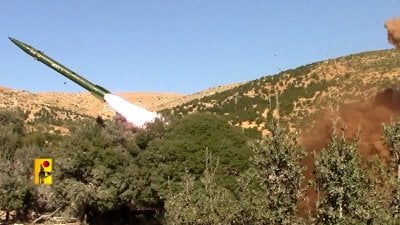
On a military scale, the military wing of the Islamic group “al fajr forces”, have been participating in launching missiles and grenades on Israeli forces in northern Palestine, financed by Hezbollah and Iran.
Al fajr forces, was founded in in 1982 after the Israeli invasion of Lebanon, whose presence completely vanished after the end of the civil war.
The report considers the revival of the military wing of the Islamic group as a real danger on the Sunni Muslim youth in Lebanon. Most of the Muslim Lebanese youth emphasize with the Palestinians following the genocide committed by Israel in Gaza. Using their emotions to recruit them to join their ranks is considered an imminent danger that should be seriously considered before it expands in all Sunni Lebanese regions.
Furthermore, the report reveals that 7 members of the fajr forces from different regions died due to the Israeli attacks. In the funeral of two of their fighters, hundreds of followers participated, including armed men. This was the first time since 1992 that a military Sunni faction makes a public appearance.
The 2026 parliamentary elections following the growth of the Islamic group in the Lebanese Sunni scene
The report indicated that the 2026 parliamentary elections will be a turning point in the Sunni scene especially since these elections will be the 2nd elections in the absence of the main pillar of the Sunni participation in the political scene in Lebanon. The results of these elections will be totally different the previous ones.
The upcoming elections will witness a new electoral bloc, and there will be a bigger division among the voters.
One of these blocs will be the Sunni bloc especially if the concerned elements in the Islamic movements, namely the Islamic group can put their hand on the necessary funding for their upcoming battle. Right now, the political dynamics encourage the growth of the Islamic movements especially since all of the individual candidates could not fill the gap that was left after the exit of former PM Saad Hariri. The Sunni participation in the last elections decreased from 44.54% to 38.33% in 2022. The 27 Sunni representatives only received 36.5% of votes.
Most of the candidates in their Constituency who received the votes were the candidates of the association of charitable Islamic projects in Beirut, considering that they received 12.2 % of Sunni votes in Beirut and 2.3% of all Sunni votes in Lebanon.
The average votes for one candidate did not exceed 1.4%. However, the candidate of the Islamic group Imad Al Hout received 1.5% of the Sunni votes in Lebanon and 7.6% of the Sunni votes from Beirut.
In 2026, the majority of the votes will go to the movements and the organized Islamic groups that can attract the biggest number possible of voters following the Gaza war and the religious tensions that are currently reigning over the country.
The report concluded that the 2026 elections will be very different considering that the Islamic group candidates doubled their votes by 2022 despite the decrease of the participation of Sunni voters by 6% in 2018. If the group can obtain some serious funding to attract the Sunni voters, it will be able to double its votes again and win seats in Beirut, Tripoli, Sidon, and Bekaa, forming a bloc composed of 6 to 8 members in the next parliament.

 الـــمــــزيــــــــــد





تــابــــع كــل الأخــبـــــار.
إشترك بقناتنا على واتساب


Follow: Lebanon Debate News